

Designing the Centre
Re-making local government community facilities for a low carbon future in low density outer metropolitan suburbs

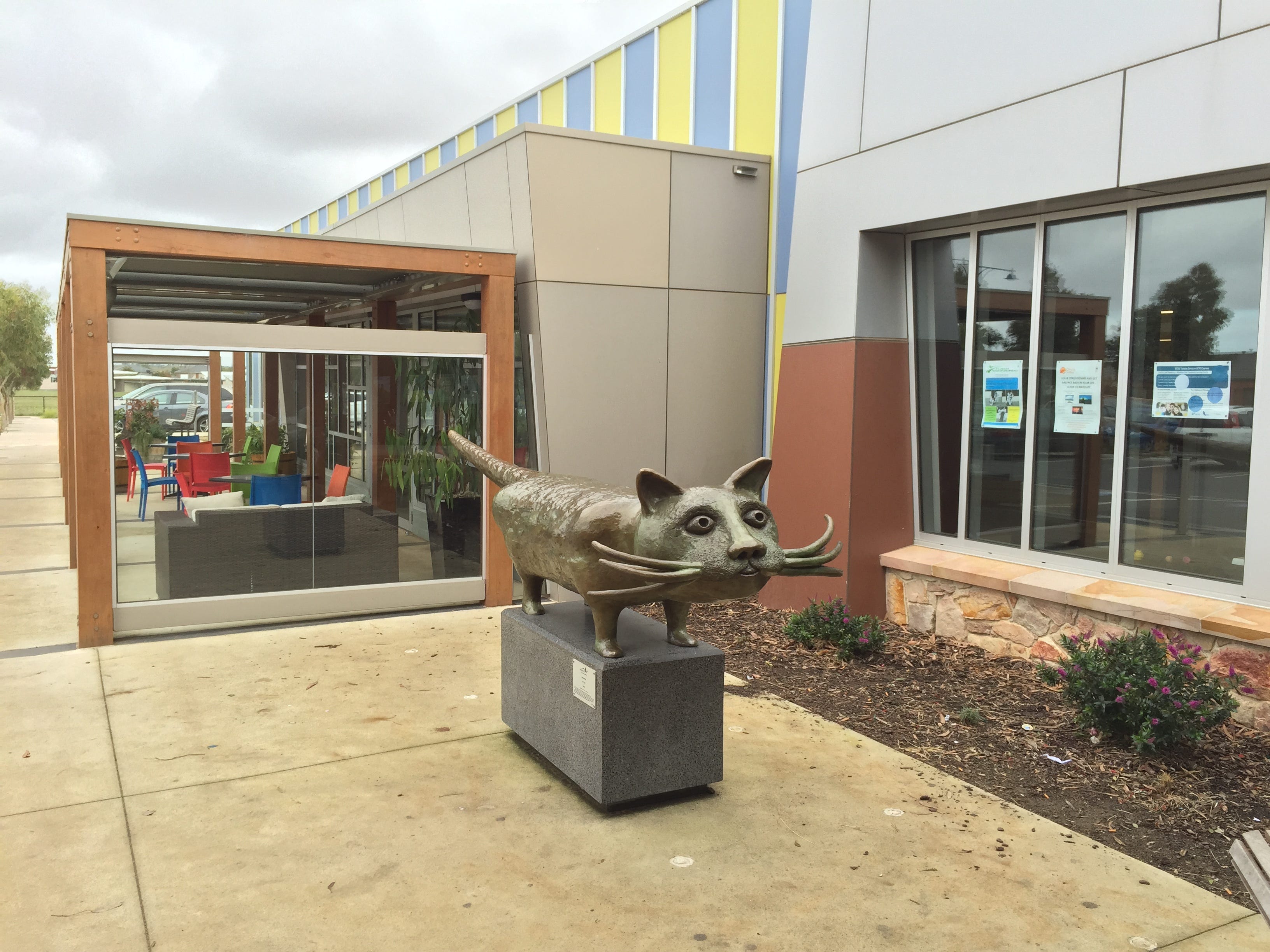
Reflection
This paper was prepared for the Unmaking Waste Conference in Adelaide, South Australia in May 2015. Our team consisted of lead author, Flavia Marcello and co-authors Bridgette Engeler, Kirsten Day and myself. Flavia presented the conference paper. My colleagues and I represented the Centre for Design Innovation at Swinburne University of Technology and were all academics in the School of Design.
As I had a long-standing interest in sustainability at Local Government level through my PhD Case Study into sustainability culture and practice at Coffs Harbour City Council, and as a new academic at Swinburne, I saw this as an opportunity to link up with the City of Wyndham for more potential research into sustainability practice in local government. To this end (and as noted in the paper) we participated in four community workshops held as part of the Wyndham 2040 planning process. This helped us to make connections with multiple staff and Councillors.
Another driver for the paper was to lay out some principles for a grant application to contribute to the Low Carbon Living Cooperative Research Centre LCL-CRC). The grant application was not successful. Feedback from the chief investigator showed that it didn’t conform with the requirement that projects demonstrate tangible carbon savings. We could have demonstrated this more explicitly in our application, as we intended to use the Wyndham community centres to run energy and carbon saving workshops for local businesses. This was a major strategy error on our part! Unfortunately our participation in Wyndham 2040 did not directly lead to further research activities at City of Wyndham, partly because the co-ordinator of research and development had left the organisation and the position was closed. I had spent a bit of time working with the research coordinator to frame an on-going research project.
But it wasn’t all gloom and doom: I did connect with the facilitator of the Wyndham 2040 planning workshops - Andre van Eymeren - who ended up being my first recruit into a PhD candidature, researching human flourishing in the context of sustainable cities! Andre used his on-going work with City of Wyndham as an action research contribution to his thesis - completed a few years ago, and he is now Dr van Eymeren!
Abstract
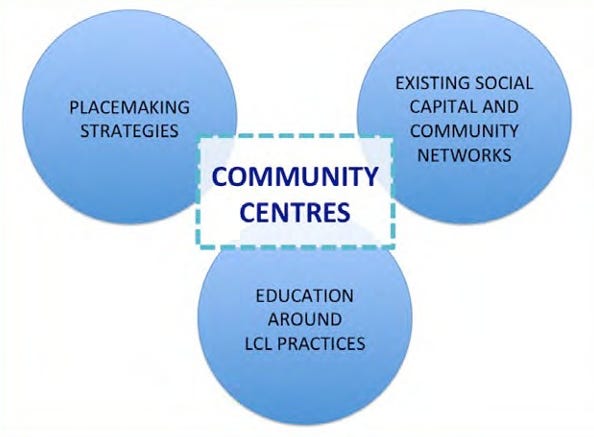
Community centres have the potential to reach beyond their architectural envelope and become central hubs of place, community and value change education around Low Carbon Living (LCL) practices. This can be done by building on the previous successes and efforts of LGA policies, actions and outcomes around sustainability awareness, inserting the community centre and its activities within a broader process of place- making, and making good use of existing social capital and community networks to educate through the promotion of value change. Lastly, community centres in major growth areas need to be considered within their future contexts as driven by the economic forces of development, the statutory framework of precinct and metropolitan structure plans and the imperatives of a minimum-waste, low-carbon future.
Introduction
Community centres, as pieces of architecture, are seen by default, as one of the principal drivers behind community engagement (Thornham & Parry 2015, 25). But what if the way they are designed – their location, planning, circulation, spatial characteristics and symbolic elements make it difficult for people to really connect? What if the mix of services they provide are not geared to respond to local communities ever-changing needs and desires? The key question is how can community centres go beyond their architectural envelope and become hubs of place, community and value change education around Low Carbon Living (LCL) practices?
If community centres can be an effective conduit for local government areas (LGAs) to provide a range of community services, how they can take on another, important role connected to sustainable development and community resilience: promoting and implementing behaviour change around LCL in those areas where it is most needed - outer metropolitan suburbs where an increasingly large majority of Australians live? To do this, the barriers to and opportunities for their potential role as promoters and enablers of LCL practices needs to be better understood through documenting, quantifying and mapping existing (and future) community networks in close collaboration with LGAs. Low density, outer growth suburbs of Melbourne are a example of an urban system that is wasteful and encourages unsustainable energy use and material flows. Their combination of car-dependence, demographic profiles, business practices and housing types result in a large carbon footprint that make them waste-engendering communities. This comes about through a complex interaction of state and local-level planning and development decisions, developers’ financial bottom lines and householder desires for large houses built from new materials, often with a high embodied energy. LGA-driven sustainability education initiatives such as Livewell Yarra have the means, demographic, and inner-urban infrastructure that predict high levels of success (Livewell 2015). The real challenge comes with implementing similar frameworks in outer growth suburbs, similar to the Eco-Acupuncture interventions carried out by the Victorian Eco Innovation Laboratory in Sunshine and Broadmeadows (VEIL 2010).
Purpose
We are here to, first, pose a set of questions; second, propose a context in which to answer them and third look at an initial case study. There is no exhaustive and conclusive argument but the initial excursion into a broader project that looks at the role community centres can play in the promotion of LCL practices in the principal growth areas of the recent Plan Melbourne metropolitan strategy (DTPLI, 2013). By mapping the accessibility, built form, use patterns and integration of outer-suburban community centres in the day-to-day civic and community functions of the areas they serve we will gain an understanding of the role they play today and allow us to design strategies for the future. Community centres are not simply architectural shells waiting to be filled with pre-determined ‘community’ activities – the ‘build it and they will come’ principle. If they are inserted within the broader context of place-making strategies and building on existing social capital and community networks, they can become catalysts for new forms of community engagement. When properly resourced, configured and connected, community Centres have the potential to integrate with the fostering of social capital and help in creating bridging networks which create of positive outcomes for health and well-being, positive parenting and child development, employment and business and ageing (DPCD 2011, 14-18). Based on this, how can processes of value change in LCL practices be woven into bridging networks to create another category of positive outcomes? Ife and Tesoriero have argued that community work has the potential to become one of the more effective ways to develop a more sustainable society (Ife & Tesoriero 2002, 23), corroborated by Gilchrist 2004 and Homan 2011.
Community Centres – existing roles
The role, function and purpose of a community centre varies from offering formal and informal learning, training and education, to a place to find leisure and sports facilities, dance classes, youth and children’s activities, clubs and societies, health and age support services, and spaces for other people-centred events and activities. It can be open for the whole community to access or made available to specialised groups within the greater community for certain times. Thornham and Parry have argued that community centres which partition space for individual use and function for specific activities and times are less successful in fostering a sense of community than those which provide flexible, ‘make-do’ spaces for group use (Thornham and Parry 2014).
Activities provided at Tarneit Community Learning Centre are devised and delivered for the benefit of the community, presumably based on what is popular, what is needed, what may reflect the skills requirements of certain demographics. However, this means centres are frequented by ‘customers’ who use these services on a ‘come-in and come- out’ basis according to their individual needs and desires (Thornham and Parry 2014, 31-2). And although such classes and activities can engender a sense of belonging to a group, they still operates at a certain level of individuality and do not help create what Gilchrist has listed as the more traditional elements of community development: informal self-help and solidarity, reciprocity and mutual aid, philanthropy and voluntary service (Thornham and Parry 2014, 34).
From the perspective of some local councils their construction or provision is a top- down deliverable, a tangible expression of a promise and a symbolic representation of ‘broader forces’ such as wider policy initiatives, socio-political and economic activities and intended statements of investment (Thornham and Parry 2014, 29).1 This deliverable includes community education activities centred on skills and knowledge-based programs such as Maths and English Tutoring or Women’s Literacy. However, behaviour change around sustainability and LCL practices operates more on attitudes, beliefs and values that cannot be ‘taught’ in the same way as skills and knowledge. In addition it is not the type of learning that occurs overnight but more through a process of time and practice, trial and error (Murray 2013, 130 & 135). These forms of value shift and behaviour change are more likely to happen in an informal, reciprocal and voluntary context where personal development and sustainable development run parallel (Murray 2013, 149). They should therefore be modelled more on informal, community-driven initiatives that leverage existing social capital such as Bollywood Dancing, Sewing Groups and Arabic Community Kitchens.
Community Centres – future roles
Effective behaviour change is not about creating new values but mobilizing existing values and tying them to beliefs and attitudes (Murray 2013). Strategies and approaches to educating outer suburban communities towards LCL can draw on similar approaches from technical and higher education contexts and adapted as necessary (Murray 2013, Mann et. al. 2013 & Shephard 2008). One barrier to this kind of education, particularly if it comes from a local council, risks it turning into yet another instance of being ‘told what to do’.2
So how can community centres be re-thought and re-considered to further facilitate their integration into bridging networks that generate positive social practices (DPCD 2011)? How can they play an important role in place-making processes? How can their potential to overcome barriers and drive change be unlocked and put to work to turn LGA community policy frameworks into reality?
More fluid, dynamic and malleable models for community engagement can inform the construction of new community centres but, more importantly in the context of waste- reduction, must include re-fitting and re-configuring existing facilities, adaptively re- using existing buildings and making more use of cyclical and/or temporary sites for community engagement such as ‘mobile’ venues and pop-up spaces.
Tarneit: an initial Case Study
Our first case study is Tarneit Community Learning centre in the South-Western suburbs of Melbourne, managed and funded by Wyndham City Council.
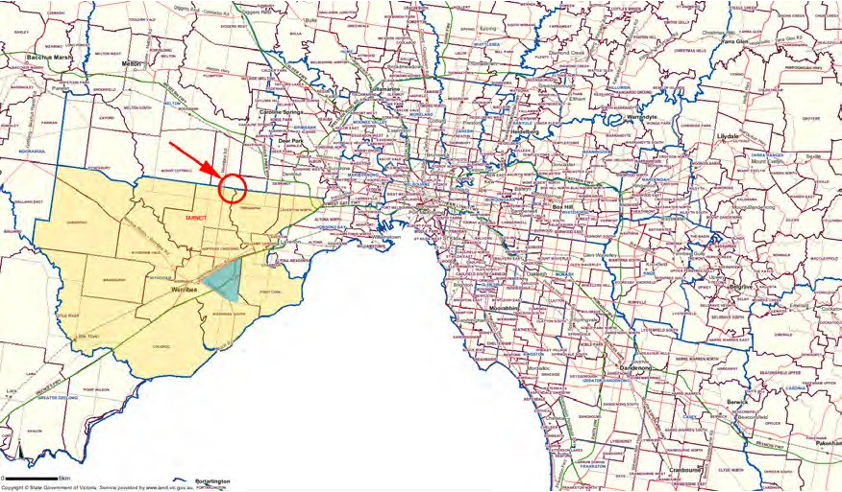
Wyndham, one 27 major councils of Melbourne’s metropolitan area, includes 16 suburbs and covers an area of 542 square kilometres. Its 2011 population was 161,575, having risen to over 201,000 currently and is projected to almost double by 2036 to 384,275 (City of Wyndham 2014). 90% of the population lives in a free- standing houses and 80% are family groups. 15.4% are in mortgage stress (where payments are 30% or more of their income), which is 5% higher than both the Victorian and the Australian average (ABS 2011). Wyndham was chosen as one of our first areas of focus for a number of its developing characteristics:
it has estimated population growth to 2050 of 500-650,000 and is touted in the Melbourne plan as an area of focus for the city’s fastest growing region (DTPLI 2013, 155)
has a critical level vulnerability for mortgage, petrol and inflation risks and expenditures (VAMPIRE) (Dodson & Sipe 2008)
it contains the emerging East Werribee employment cluster that is expected to provide over 50,000 new white collar jobs in the health, education and high-tech research areas (DTPLI 2013, 48)
is classed as peri-urban under Melbourne plan and will therefore become one of Metropolitan Melbourne’s permanent boundaries (DTPLI 2013, 140-2)
will be served by the only two new stations of the soon-to-be-completed Regional Rail Link (Regional Rail Link 2014)
has a number of effective and well-organised community organisations and networks (Wyndham City 2014)
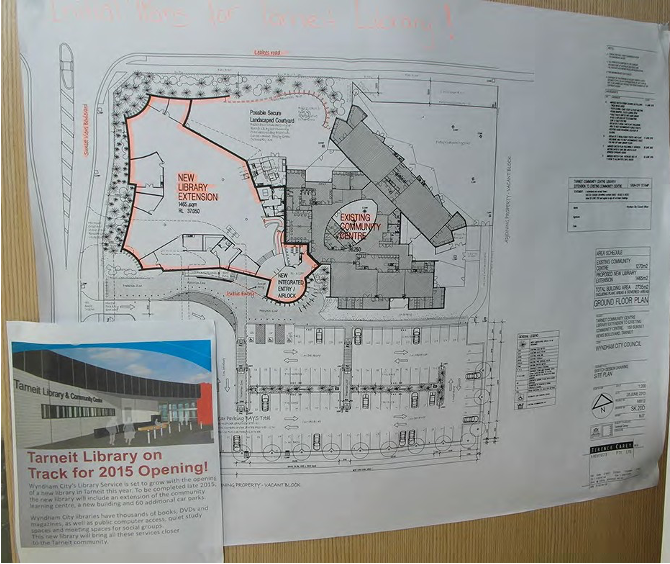
Of Wyndham’s thirteen existing community centres, Tarneit centre is of further interest for three reasons: its particular location, it is the most recently completed and it is currently being expanded with the construction of a new library opening in 2015. It sits on Leakes Road Tarneit which today (beginning of 2015) acts as a dividing line at the very edge of the metropolitan boundary: with single family home suburban development to the south and unused farming land to the north.
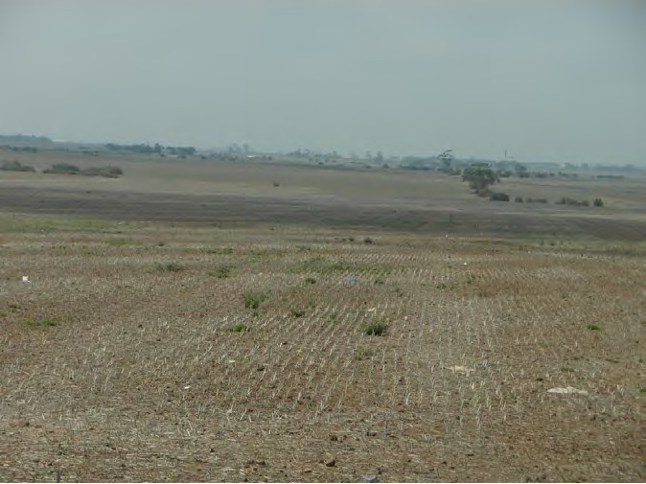
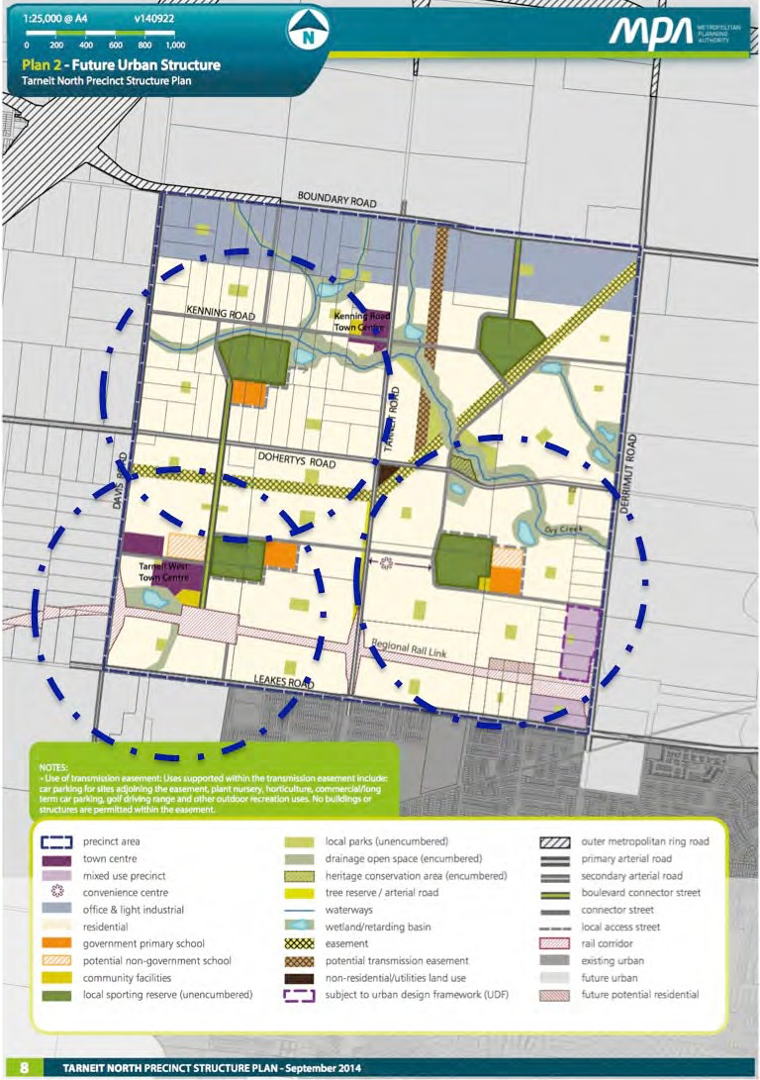
However, by 2050, the scenario will be a different one. This starts in 2015 with the opening of Tarneit railway station on the new Regional Rail Link connecting Melbourne to Geelong and the completion of a library as an extension to the existing community centre. Further, there are six applications for subdivisions under the proposed Tarneit North Precinct Structure Plan (PSP) for 3,300 new homes and three new schools. Of these new homes, less than a quarter will be within 10 minutes walk of the Tarneit community centre although the PSP anticipates the construction of three (as yet unspecified) community facilities. There are general guidelines for their siting and parking provisions of future facilities but no other specifics are given.
Tarneit Community Learning Centre’s aims, as stated on its website, are to:
“encourage life-long learning, personal growth and well-being through the provision of widely accessible programs, services and facilities” and to
“provide opportunities for involvement and participation by the residents of Wyndham North and to foster a sense of place through collaborative partnerships with Wyndham City, other key stakeholders and the wider community.”
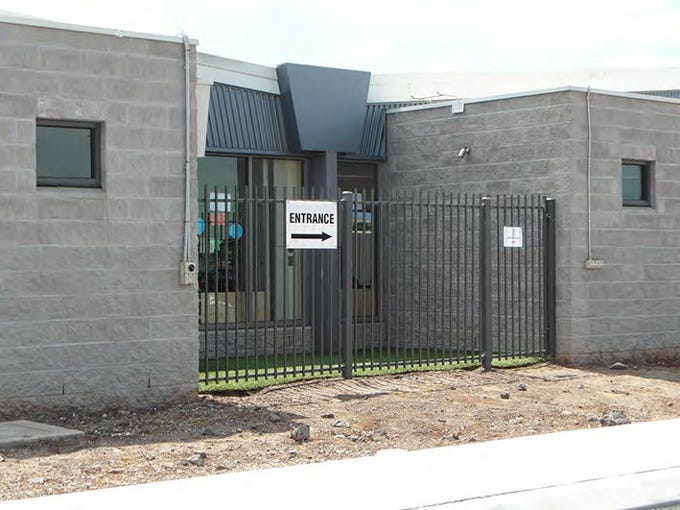
The question is, how can what it aims to do and what it actually does properly align? How can the construction of a lone building, on a long arterial road with a car-park out the back be widely accessible, foster a sense of place and facilitate collaborative partnerships? At present, barriers to its use and accessibility are related to: its distance from public transport (the nearest bus stop is 10 minutes walk away and services run no more frequently than 40 minutes) and the positioning of its entrance from the carpark side. Its interior plan layout does not help. Its compartmentalised rooms are assigned their designated functions and are organised around an oddly-shaped courtyard with no weather protection.
One answer to this question is make it more central to the process of place-making. While public places and architecture play a key role in building community, placemaking can empower local communities to create a sense of belonging through the creation and communication of place, because it ‘provides an important mobilizing discourse and identity for collective action’ (Martin 2003).
Community centres should be hubs of activity, a central connection point for a community and a place of hope and change but they can also become an all-purpose term to convey the desired synthesizing of community connection and relationships that is often not reflected in its uptake and use. For a place to form, it must enable the existence of one or more ‘centres’ or spaces that offer ways of encounter and/or gathering (Friedmann 2010). It then requires identification to designate its location, locale and sense of place. Placemaking can mark the birth or rebirth of a community, but it is not simply the act of building or refurbishing buildings and spaces: it can be a significant and compelling re-examination of everyday settings and experiences that ultimately brings positive change into a community and the lives of its people and can therefore act as an ideal venue for value change around LCL practices.
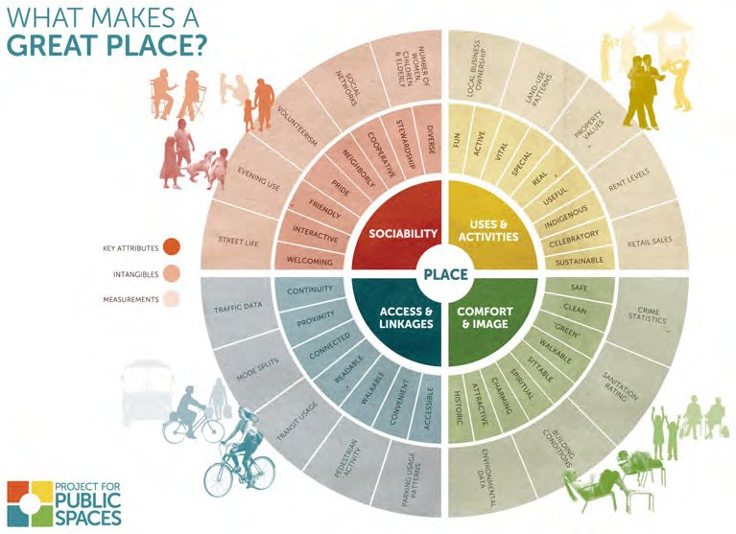
If placemaking is about creating spaces where people and businesses want to be, then the community centre is one of its critical elements because of its potential to bring people together. Placemaking is a set of social, political and material processes by which people create and recreate the experienced geographies in which they live.
Creswell identified the characteristics of urban places as reiterative social practices, inclusiveness, performability and a dynamic quality, to which Friedman suggests adding size (small), being inhabited, and becoming cherished or valued by its resident population for all that it represents or means to them (Friedmann 2010). As we will see, these notions connect closely to the factors known to shape the less physical idea of community and its all-important networks (Gilchrist 2004, 2-8). The power of placemaking and the power of a community centre are one and the same. Both lie in their connectedness: the inherently networked process by which socio-spatial relationships link individuals together through the common frame of place. Ultimately, both placemaking and community centres support and facilitate greater interaction between people to foster healthier, more social, and economically viable communities. If citizens are tied to the community through sense of place there is a greater potential for empowered action (Murray 2013, 143-4).
Building on Local Government Sustainability Initiatives
Over the last thirty years of the sustainability movement, local government has placed itself at the forefront of change towards sustainability. This has resulted in an extensive track record of efforts to change practice towards better environmental performance and more sustainable communities, with varying degrees of success (Parnell, 2005 & 2010). This suggests that sustainability efforts require regular “refreshing” to re-activate efforts of long-term council staff and residents (with the long view and corporate memory of past actions), as well as younger people and newcomer council staff and residents alike.
Our future work with Wyndham will recognise past successes and failures from other LGAs and build on what are valuable current initiatives, programs and processes. In particular, their “Green Living Series” which includes workshops on LCL-related issues such as: Designing and retrofitting for a more Sustainable Home and Climate Change Risk Management in Wyndham.
Policies, programs and other documents centering on sustainability change efforts and community “strengthening” (Wyndham City, 2014 & Wyndham City, 2011) will also be a valuable starting point.3 Tarneit responds in broad terms to their Community Strengthening Policy and Framework document (Wyndham City, 2014). More empirical research remains to be done to see how the centre and its activities are perceived by local residents in how it promotes and sustains their sense of community. But how does it (or can it) play a role in Wyndham City’s Environment and Sustainability Strategy (Wyndham City, 2011) to 2015 and beyond? The research team have been invited to observe the upcoming community district workshops under the Wyndham 2040 program, a community visioning and strategy incorporating a district planning process and community-led action (Wyndham City, 2015). These also present an opportunity to present on LCL strategies as a ‘road test’ for how LCL may be incorporated into future programs and pave the way for community centres to become a nexus where both community and environment policies achieve their outcomes.
Conclusion
Community centres are not just architectural shells, an LGA deliverable that signifies to the community that they are fulfilling their promises and providing tangible outcomes to enact the aims of their various policy documents. There is also an urgent need to reduce waste in contemporary society through the promotion of LCL practices centred around on bottom-up, community-driven value change. Nowhere is this more urgent than in the developing outer-metropolitan suburbs. Here low-density, car-dependent communities are made vulnerable to mortgage, petrol price and inflation risks in an environment which exacerbates climate change, creates waste and increases carbon consumption. Communities are not simply designed and built, they are the result of a much more complex network of processes and people. Low-energy homes, public transport and recycling are not enough to engender LCL practices, new forms of community engagement are needed. One solution is to re-configure the community centre into a space which allows for fluid, dynamic and malleable models of community engagement. Community centres which are inserted within the broader context of place-making strategies and build on existing and emerging social capital and community networks.
With the long view of change for sustainability, the impact of change can be observed, but its driver may be unclear: over time a range of influences on social and individual behaviour are at play in a complex web of influence and interaction: from the local to the global: friends and family; social networks; government programs; economic conditions; demographic progression; environmental education in schools and so on.
The reality for our research, then, is that our participation with local government and the communities they serve, can potentially be a contributing influence to the local cultural system of LCL.
References
Australian Bureau of Statistics. 2011. “Census QuickStats. All people - usual residents”, Wyndham (C), Code LGA27260 (LGA) http://www.censusdata.abs.gov.au/census_services/getproduct/census/2011/quickstat/ LGA27260 [Accessed 13 February 2015]
Agnew, J. (1987) Place and politics: the geographical mediation of state and society Allen and Unwin, Boston MA
Dodson, Jago & Neil Sipe. 2008. “Unsettling Suburbia: The New Landscape of Oil and Mortgage Vulnerability in Australian Cities”, Research Paper 17, August. Griffith University Urban research Program.
Friedmann, John. 2010. “Place and Place-Making in Cities: A Global Perspective”, Planning Theory & Practice, 11:2, 149-165.
Gilchrist, Alison. 2004. The well-connected community : a networking approach to community development Community Development Foundation (Great Britain), Bristol, UK: Policy Press.
Homan, Mark S. c2011. Promoting community change : making it happen in the real world. 5th ed., Belmont, CA : Brooks/Cole--Cengage Learning.
Ife, Jim & Frank Tesoriero. 2002. Community development : community-based alternatives in an age of globalisation. 2nd ed., Frenchs Forest, N.S.W. : Pearson Education Australia.
Livewell Yarra. Communities Achieving Low Carbon Wellbeing. http://livewell.net.au/about/who-we-are/ [Accessed 5 March 2015]
Mann, S., J. Harraway F. Broughton-Ansin L. Deaker K. Shephard, (2013), “Seeking richer descriptions of learners’ sustainability attributes and learning needs”, International Journal of Sustainability in Higher Education, Vol. 14 Iss 1, 90 – 100
Martin, Deborah G. 2003. “‘Place-Framing’’ as Place-Making: Constituting a Neighborhood for Organizing and Activism”, Annals of the Association of American Geographers, 93(3), 730–750.
Pope, Jeanette. 2011 Indicators of Community Strength in Victoria: Framework and Evidence. Why social capital can build more resilient families and communities. State of Victoria, Department of Planning and Community Development.
Murray, Paul. 2013. “Leading by Design. Cultivating Self-leadership for Sustainability.” In Motivating Change. Sustainable Design and Behaviour in the Built Environment, edited by Robert Crocker and Steffen Lehmann, 130 & 135. Abingdon: Routledge.
Regional Rail Link 2014 “Tarneit Railway Station” http://www.regionalraillink.vic.gov.au/construction/stations/tarneit [Accessed 13 February 2015.]
Shephard, Kerry (2008), “Higher education for sustainability: seeking affective learning outcomes”, International Journal of Sustainability in Higher Education, Vol. 9 Iss 1, 87 - 98
State of Victoria, Department of Transport, Planning and Local Infrastructure. 2013. “Plan Melbourne. Metropolitan Planning Strategy”
Thornham, H. & Parry, K., “Constructing Communities: the Community Centre as Contested Site.” Community Development Journal 50: 24-39.
Urbanalyst, “Final designs of Wyndham Vale and Tarneit railway stations unveiled”, Urban Analyst 2013 http://www.urbanalyst.com/in-the-news/victoria/1771-final-designs- of-wyndham-vale-and-tarneit-railway-stations-unveiled.html [Accessed 13 February 2015]
Victorian Eco Innovation Lab, What is Eco-Acupuncture? http://www.ecoinnovationlab.com/project_content/what-is-eco-acupuncture/ [Accessed 5 March 2015]
Wyckoff, Mark, A. (2014) “Definition of Place-making: Four Different Types”, MSU Land Policy Institute. http://www.canr.msu.edu/uploads/375/65824/4typesplacemaking_pzn_wyckoff_january 2014.pdf [Accessed 7 March 2015]
Wyndham City, 2015. Wyndham 2050. Your Community, Your Vision. http://www.wyndham.vic.gov.au/aboutwyndham/consultation/wyndham_2040/communit y_engagement
Wyndham City. 2014. City of Wyndham Population Forecasts. http://forecast.id.com.au/wyndham/home [Accessed 13 February 2015]
Wyndham City, 2014. Growing Wyndham’s Community Strength. A Community Strenghtening Policy and Framework for Wyndham City.
Wyndham City, 2014. Tarneit Community Learning Centre http://www.wyndham.vic.gov.au/residents/community/comcentres/community_centre_li sting/tarneit
Wyndham City, 2011. Wyndham City Environment and Sustainability Strategy 2011- 2015. http://www.wyndham.vic.gov.au/aboutwyndham/planspolicieslocallaw
It just goes to show that some things don’t change. Pope Nicholas V famous deathbed speech exhorted his architect to produce buildings for the primary purpose of representing and signifying the primacy, intentions and authority of the Roman Church. Niccolò V Parentucelli. 1975 “Testamento.” In Storia dell’architettura. Antologia critica edited by L. Patetta, Milan: Bompiani, 113. Originally published in Ludovico Antoinio Muratori, Rerum italicarum scriptores, III, Forni: Sala Bolognese, col. 949
Conversation with Paula Wright, Wyndham City Council re council initiatives on Healthy Living, for example.
The environment policy is mostly concerned with the environmental performance of council infrastructure. The section on Greenhouse Gas Emissions and Energy focuses only on Council buildings and infrastructure such as street lighting. Community buildings are included by implication.