

Complexity-based strategic design for organizational development within small scale innovation organizations.
A case study

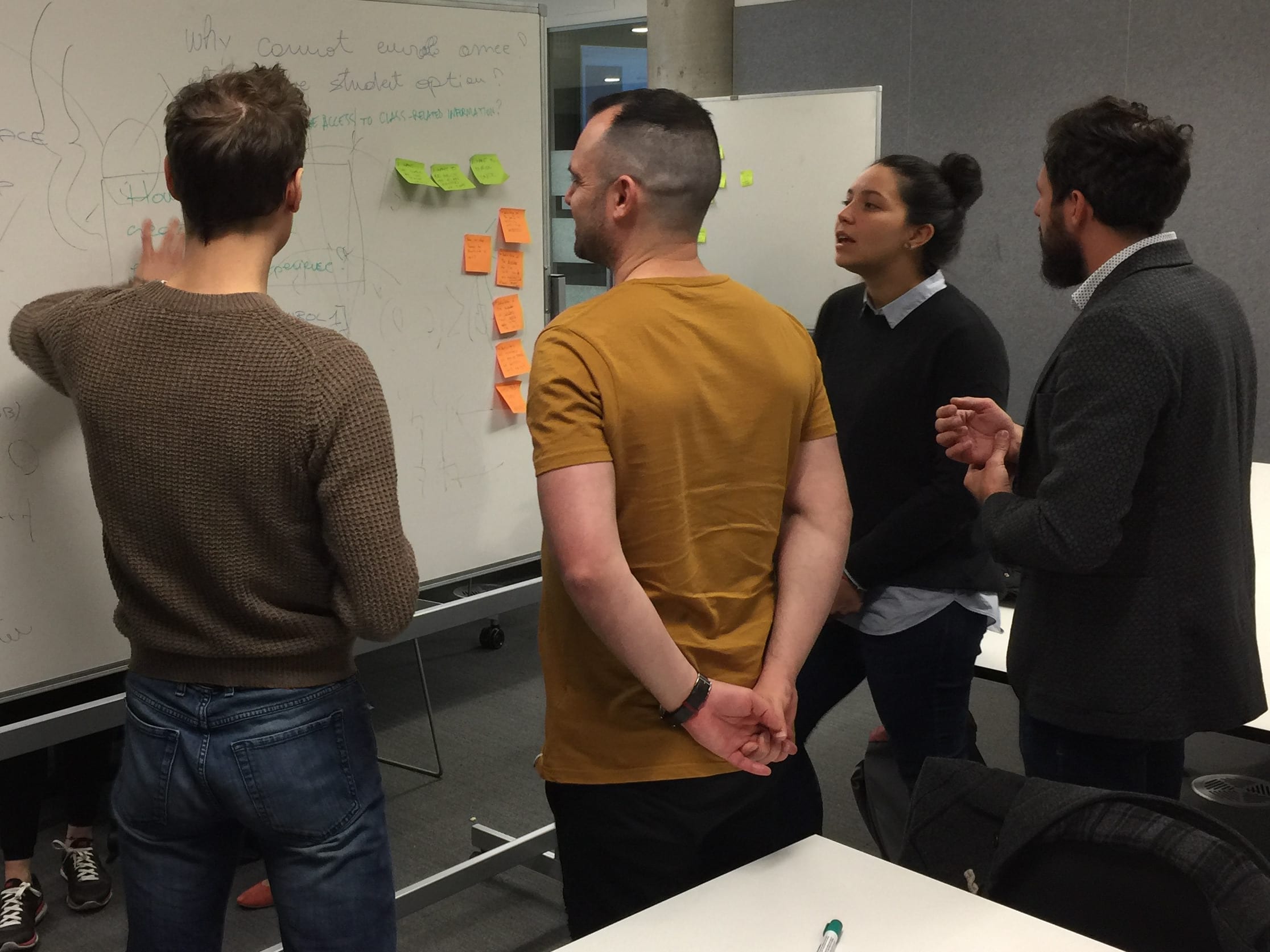
Reflection
As with the previously published paper on urban traffic congestion, students were encouraged to connect with businesses, organizations, start-ups, non-profits and social enterprise to work on embedded projects at the service of the partner organizations. One of the students worked for a Melbourne-based medical devices company as their research and innovation lead. The company owners kindly allowed us to publish this paper on complexity in small-scale innovation organizations and present it at the DMI London Conference.
As before, I reserved the right to edit the paper and add any further theoretical and practical information and insights that I thought necessary, while respecting the students’ work.
The students for this paper - Marco Regis, Paloma Leon Ravest, Nadine Burgel Moschetta and Anisha Sharad Bijur - wrote a very professional beautifully illustrated report and presentation for their client partner and reworked the report as the submission to me for their unit assessment. As with the previous paper, I reworked the content to make it fit the academic requirements of the conference and added substantial text to strengthen it.
The paper was accepted for inclusion in the conference program. As with the previous paper, my Swinburne colleagues, Dr Maria Camacho and Brigitte Engeler, presented on our behalf.
On reflection, the level of treatment of the complexity of the practice setting by the students and their approach and methodology uncovered valuable insights which were beautifully framed such that the client partner could begin to implement the new organizational design.
Introduction
In this paper, we report on an organizational development project within a small-scale medical device company in Melbourne, Australia. Like many growing companies operating at the leading edge of innovation, success leading to growth creates new organizational problems, especially when internal processes hinder the overall company vision. This project supported the objective of improving the company’s development strategy, by using a complexity-oriented strategic design approach. The project was carried out by students from the Master of Design Strategy and Innovation course in the School of Design at Swinburne University of Technology, Melbourne, Australia between August and December 2017.
There is an increasing interest in managing companies and organizations by considering them as complex living systems, because conventional linear, mechanistic approaches to change regularly fail to deliver desired outcomes. By using a holistic complexity-oriented approach to strategic design practice in organizational development and change, there is potentially greater capacity to respond to unpredicted emergent patterns and to activate the energy inherent in organizational networks. Such approaches enable development problems to be re-framed within the context of networks of social interactions. Because conventional Design Thinking has limitations concerning long term sustainability in complex organizational development practice, a complexity-oriented approach to strategic design was proposed as a complementary practice to achieve meaningful innovation within the company.
For the purposes of this paper, we consider strategic design to be the application design-thinking based methods to the development of organizational strategy and change. Further, a complexity-based approach extends design thinking by accounting for the degree of complexity of the practice context and the potential for emergent, rather than just designed, outcomes.
Theoretical Frameworks
Traditional problem-solving involves the examination of problems and components in isolation of its larger context (Mair, Martincova & Shepperd 2009). However, the world we live in is far more complex and interconnected for this to be effective. As with ‘wicked problems’ (Buchanan 1992), challenges exist at multiple scales and are hardly reconcilable to a mechanistic view of the system in which designers are called to operate (Brown, Harris & Russell 2010).
The internal environment in an organization is one of such spaces. Viewed as a Living System, it is open, self-organizing and composed of rich interactions and relationships between actors (Meadows 2008). In such an environment, traditional design and management problem-solving tools focus on synthesis and help achieve short-term incremental innovation. However, these linear, mechanistic approaches often fail to cause the desired change and deliver outcomes. The limitations come from not having a macro-level understanding of the system in which they operate. As a result, there is an increasing interest in considering organizations as a Living System.
The need for big-picture-thinking and analysis of systems is evident to develop strategies that are able to better cope with present challenges. By using a holistic complexity-oriented approach to strategic design practice in organizational development and change, there is potentially greater capacity to respond to unpredicted emergent patterns and to activate the energy inherent in organizational networks.
A large body of research has been carried out to identify models and tools to effectively translate the systems theory into meaningful strategies to activate, implement and sustain the desired innovation (Rogers 1995).
Organisational development has recently been drawing from concepts such as Emergence and Complexity (Capra, 2002; Checkland, 2006 Gharajedaghi, 2011; Nedopil et.al, 2011). Studying the emergent behaviour within a system, of relationships between its actors, is helpful for developing effective strategies to activate change within. Additionally, a sense-making framework offers a better understanding of the context in which a company operates. By identifying simple, complicated, complex and chaotic processes, it is possible to address them appropriately using different approaches (Boone & Snowden 2007;Cognitive Edge 2009, 2010). Recognising the levels of complexity enables decision makers and strategists to use appropriate tools and make informed decisions, resulting in more effective outcomes (Cognitive Edge 2009).
Often when there are no predefined strategies within an organisation, a strategy emerges based on the behaviour inherent within the system (Walloth 2016). Harnessing emergence is important for activating change processes within a network, since organic responses may threaten to overthrow the rigid linear-based initiatives (Walloth 2016).
To overcome these limitations, the focus on implementation, adoption and sustainability of innovation and change is important. The understanding of how such processes can be fostered and maintained can be found in Arnstein (1969) who proposed the engagement of the people within an organisation as crucial for the achievement of sustainable innovation. Arnstein proposed a model of participation that showed the various levels and types of participatory behaviour that actors in a society or system may exhibit. This hierarchical system can be used to observe and categorise how individuals function, communicate and interact within a system. It helps identify whether the organisation is characterised by manipulation of information and ideas, or by partnership and participation among staff and departments.
Further contribution to this area came from the anatomy of cultural change model proposed by AtKisson (1991), that examines how the diffusion of innovation and change occurs in a system. Atkisson (1991) identified nine different types of actors in this system: Innovators, Change Agents, Transformers, Mainstreamers, Unwilling Laggards, Reactionaries, Iconoclasts, Spiritual Recluses and the Renunciate Curmudgeons. They demonstrate reactions that contribute to the system’s adoption and acceptance of change.
These lines of study provide fertile grounds for practical application and investigation. Although the theoretical overview offered above is considerably selective and constantly evolving, it nevertheless offers a unique approach to support organizational development while overcoming limitations of linear-based approaches. It is therefore important to investigate the applicability of the proposed methodology as a complementary practice to achieve meaningful innovation within organizations.
Methodology
The investigation of this project is focused on the internal culture, processes and dynamics occurring within the subject company. Design research methods and participatory tools were used to gather data, while the theoretical frameworks supported re-framing and analysis.
The objective of the project was to: (i) understand the company’s functioning, expression and language, (ii) map out the formal networks and highlight underlying informal structures, (iii) identify areas of improvement from an organizational development perspective; and (iv) develop a strategy informed by a living systems perspective and complexity-oriented decision making, to improve internal alignment towards the company’s vision.
With regards to the design research, qualitative methods were applied. Interviews were used to capture qualitative data, especially regarding subjective and internal dynamics-related topics. Semi-structured questions were posed to the managerial level of the organization, so as to have an overview of the company’s functioning and insights on the internal perception of the processes’ level of complexity. To get further inputs on those aspects and to map the informal network (human relationships) of the company, shadowing and observation were used to capture unconscious behaviour and dynamics exhibited by the company’s employees in an everyday routine.
Day-to-day situations in the office, including social interactions, relationships and organizational behaviour were recorded during the research activity. Emerging patterns were also tracked. To track this without influencing the outcome, an internal staff member was recruited to anonymously acquire the data and observations. This approach was particularly successful as it prevented employees from acting unnaturally and gave the possibility to study the company’s functioning in an unbiased real-life setting.
The observations were then compared with survey data, with the purpose of investigating and uncovering the relationships and understandings that employees had with the company’s ethos and vision. All employees responded to a short anonymous survey, in which questions ranged from their vision of the company, their understanding of its strategy and the people they connected the most with during work.
As part of the qualitative research, participatory workshops were then performed with employees in the company premises and outside. The different spaces offered them the opportunity to freely express their thoughts outside a formal, corporate environment to foster the emergence of a shared solution that would be most relevant and relatable to the employees rather than to create one independently and imposed upon them (Sanders & Stappers 2008).
The Team Dynamics Activity (Wujec 2015) was used to observe team dynamics and individual behaviour when engaged in problem-solving situations within groups. For this purpose, the ‘Spaghetti Challenge’ was organised, with participation from all employees (except the chairman). Conducted in multiple teams of 3-5 people each, this was a fast-paced team activity inspired by the ‘Marshmallow Challenge’ (Wujec 2015). It helped observe the behaviour of individual employees and the group dynamics when members engaged in a collaborative activity, in a medium-stress situation.
The interpersonal relationships between employees was further investigated through a journey mapping activity. All employees, working in two mixed teams, were asked to map out the entire product development, production and delivery cycle based on one particular previous complex experience. After mapping the specific tasks, people, feelings and feedback gathered from that experience, the teams were invited to compare and contrast their work with each other, which allowed a collective reflection. It leveraged team knowledge by connecting the diverse departments and uncovered the potential of a joint reflective practice in improving company’s internal functioning and processes.
Finally, selected employees were engaged in a strategic-planning exercise through The Future Backwards workshop (Cognitive Edge 2009). They were identified based on their prominent network and relationships within the company, informed by previous research. They were engaged in a scenario-generation process, drawing on the company’s history and milestones, and extending its trajectory towards possible thriving or failing scenarios. They were asked to recount the milestones and events during the company’s past growth, and then iterate the process for possible ‘heaven’ and ‘hell’ situations in the future. Doing so enabled the employees to more consciously see the pathway towards the ideal outcome, and how the company’s strategy and actions would need to be refined to support it.
In total, throughout the duration of the study, seven interviews with the management, six hours of workshops, one survey, and forty hours of shadowing were performed, enabling the mapping of internal company dynamics and emergent behavioural patterns.
Categorization of Complexity in the Organisation
To propose a strategy to support company growth and innovation, experiential scenarios were presented to the management and staff. Its aim was to use foresight storytelling to bring about engagement and positive discussions around these topics. The outcomes were narratives that followed the company and personnel trajectories amidst the hypothetical implementation of the strategic design work carried out for this study.
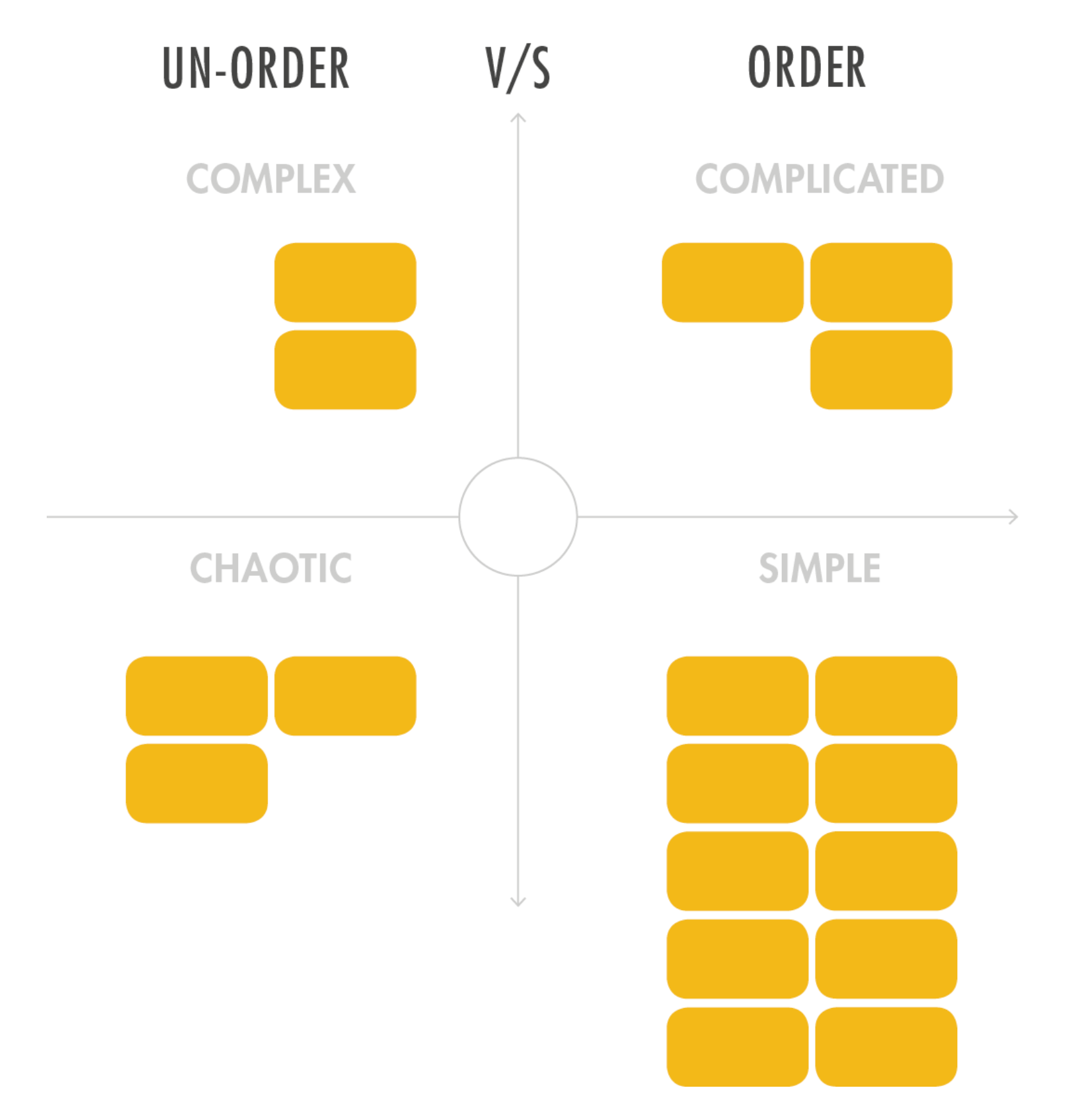
When referring to the Cynefin Framework (Cognitive Edge 2009; Cognitive Edge 2010) and examining the internal perception of the company’s processes, it could be observed that the staff clearly considered business purpose, strategy, and decision making as chaotic and unordered activities (Figure 1a). This categorization implies that these processes do not respond to logical cause-effect relationship, or to directional or purpose-driven forces. This was reflected in how employees described the activities around those topics during the semi-structured interviews.
On the other hand, the great majority of the other processes were seen as best practice, meaning that much of the company’s processes were carried out in a simple space. Best practice areas included competitor analysis, customer management, healthcare policies, knowledge/skills management, manufacturing process, internal policy, internal procedures, mission and vision, and culture.
Other processes were classified by staff as either complicated or complex, depending upon the related level of expertise or knowledge of the respondent. Processes and activities regarded as complicated were: current product offerings, internal communication, and the management and planning of activities. Processes and activities regarded as complex were: managing research partner relationships and engaging with regulatory bodies. In the latter case, this was because multiple process iterations were required and uncertainty existed. Additionally, staff believed that the use of best practices or “champions” was not the best approach to identify and implement improvement strategies.
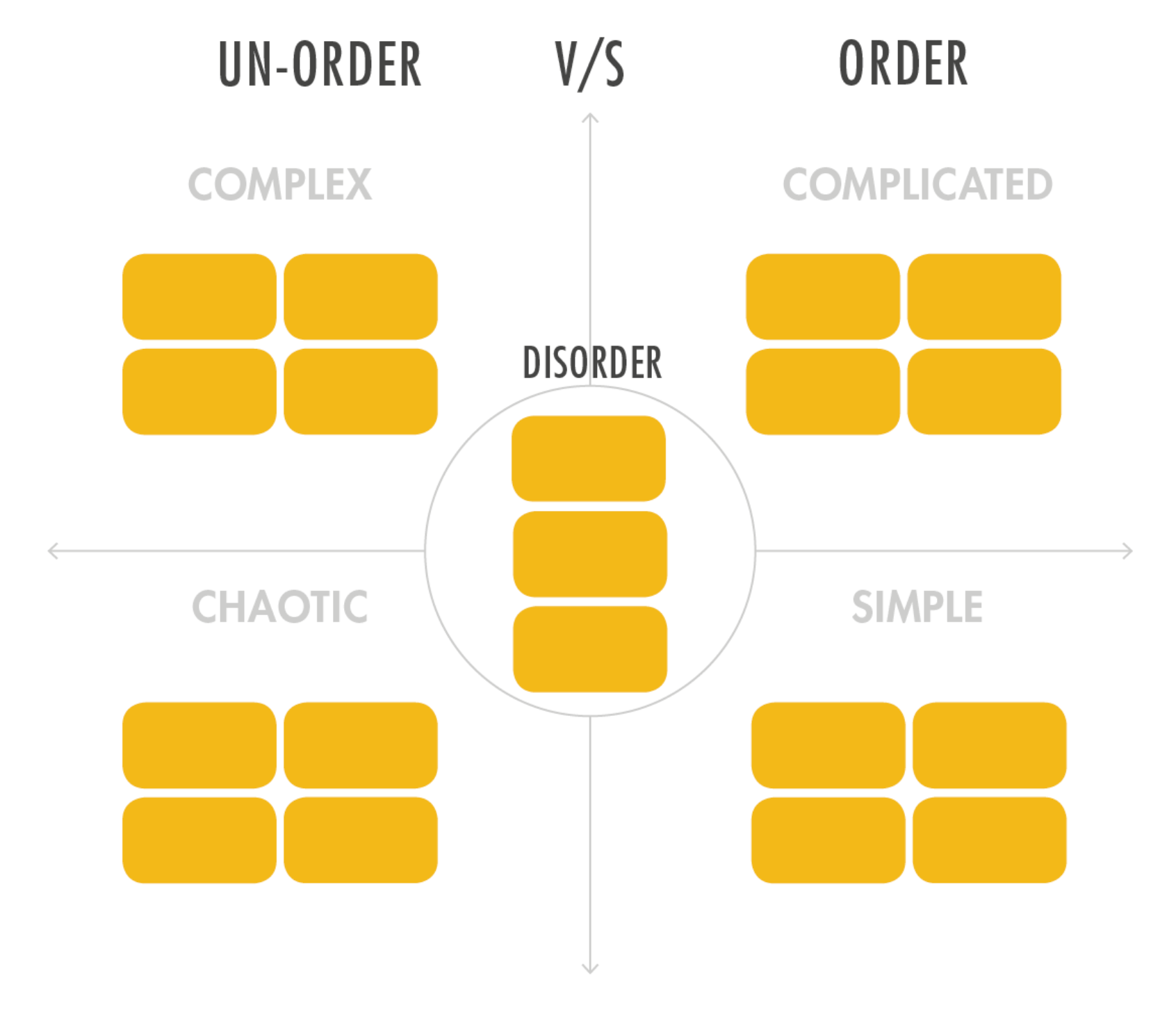
When applying the same processes from the Design Team’s perspective, differences emerged in the classification. This affects primarily the ‘simple’ quadrant, as shown in Figure 1b, in which only healthcare policies and internal policies are left. In addition, ‘simple’ processes include decision making and partner relationship. As supporting evidence, basic cause-effect relationships can be identified for both processes: decision making is carried out daily on the basis of the resources/knowledge available, while partner relationship is managed on a subcontractor level. Being in the ‘simple’ quadrant, there is a risk that oversimplification of these processes may push it into a chaotic realm.
On the contrary, complex processes include customer management, competitors analysis, internal procedures, and user understanding. While it is believed they are regulated by best practices and knowledgeably managed, there are gaps that make categorization difficult. Customer targeting is not fully developed, competition is under-researched and possibly underestimated, and internal procedures and user needs are usually neglected. While these issues are common in early start-ups of this size, correct identification and categorization helps tackle them appropriately.
Manufacturing processes, knowledge/skills management, regulatory bodies engagement and culture are more understood and established processes. They require compliance to pre-established patterns (regulatory bodies) or support for continuous improvement practices (culture, manufacturing, knowledge). Therefore, despite an internal perception by the company of these aspects being simple or complex, they have been categorized as complicated.
Notably, while communication is perceived as a mechanical process improvable through formal introduction and regulation, it is indeed a chaotic process. Neither rules nor hierarchy are followed in sharing information and assigning tasks, and this results in a problematic, interconnected communication process. Despite identifying communication as a major challenge, underestimating its level of complexity results in a lack of appropriate measures put in place by management and staff.
Findings
Based on the activities reported above and on the Cynefin Categorization process, the Design Team has identified appropriate communication, with particular focus on bridging management and staff needs; and fostering the internal culture around a shared, co-designed strategy as critical to organizational development.
A significant factor that is currently responsible for the imbalance in the company’s culture is the divergence in the comprehension of its vision. Whilst the founder and current chairman have a strong and inspiring vision for the near future, differences in understanding and feasibility of the strategy within the company emerged during the research. Despite recent attempts to communicate the vision internally (mainly through a top-down informative approach carried out by the founder himself), findings indicated that further time and actions will be needed for its ‘buy-in’ and understanding internally within the company.
This issue was particularly highlighted by comparing the founder’s vision taken from the interview and the results of a company-wide survey. The results revealed that the company’s vision as understood by the staff, was scattered in two different directions. For the majority of the staff, the vision was manufacturing and product-centric, instead of service-centric as proposed by the founder. As a result, concerns on company’s future and havevalso emerged. Word clouds reporting these insights are illustrated in Figure 2.
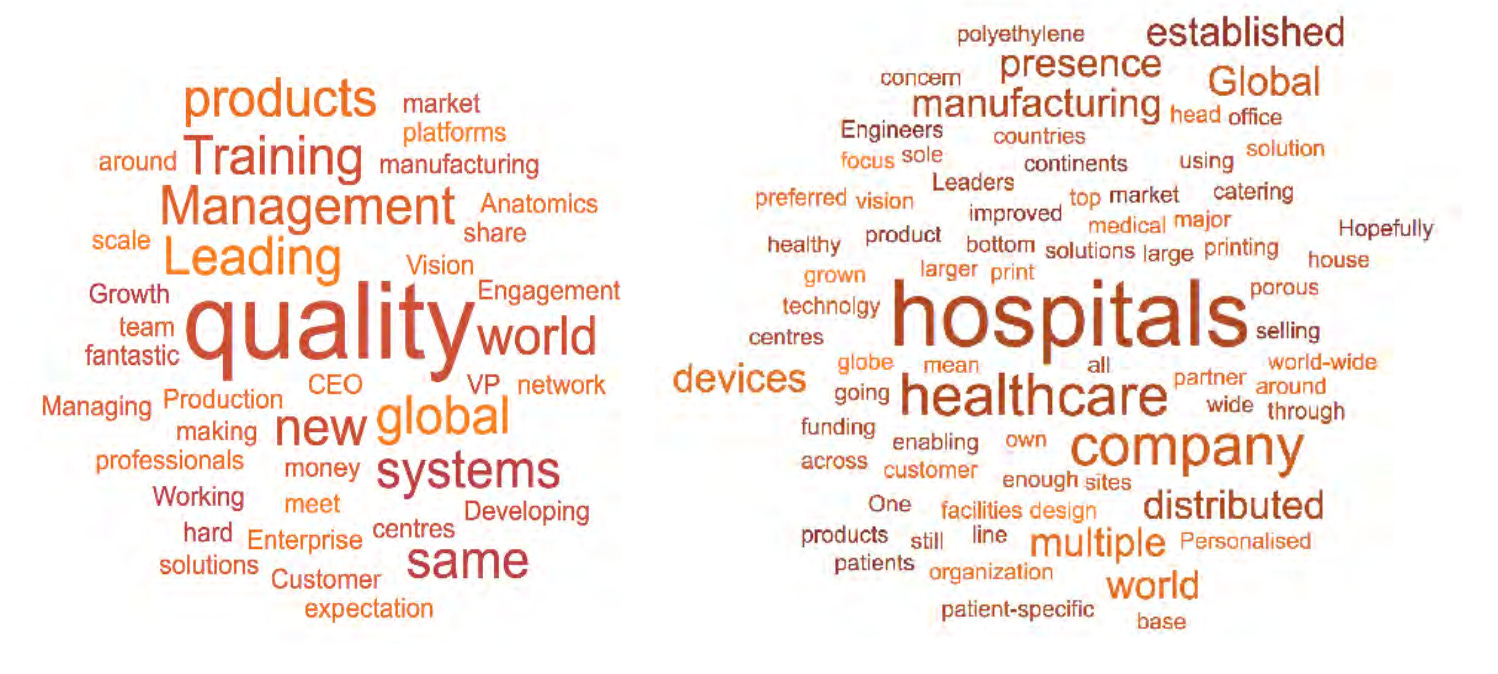
The company vision is not perceived differently by all employees, because the milestones and short-term strategies to reach it are constantly changing and are poorly understood within the company. The resulting internal perception is of a lack of a uniform and coherent strategy. This generates confusion, conflict and risks alienating management and staff. While flexibility and speed of action is maintained, committing to common milestones must not be seen not as a threat to company agility, but as an opportunity to build internal confidence and resilience.
Through this process, it has been possible to identify behavioural patterns that offer an insight into the way the company operates internally. In order to better describe these emergent patterns, findings have been compiled at both, an individual and at an organizational level.
At the organizational level, formal meetings and communication occur frequently with the aim of managing and maintaining consistency in operational activities. However, this does not always result in effective collaboration for everyday practice, leading to functional silos being created.
This widening functional separation has resulted in the emergence of strong informal networks and relationships between staff. This is also a result of the company being small in size and relatively co-located. Such informal communication connects the majority of the organization and ensures its functioning.
High dependence on the informal network risks the exclusion of certain individuals whose presence and involvement is important, but can potentially be bypassed. Additionally, the information discussed informally is not always relevant to company business. Leveraging these networks for business-related communication can risk the loss or misinterpretation of objectives and priorities.
As is true in many companies, most positions demand a balance of hard and soft skills. In addition to this, the match between personalities and the demands of a role are essential. Every individual at the medical-device company has the skills that help them successfully fulfil their duties on a day-to-day basis. However, when unforeseeable situations arise, the lack of common objectives and strategy causes individuals to fall back upon their inherent personal capabilities to deal with the situation. A mismatch of capabilities in key positions can cause roadblocks and conflict.
To map out this human aspect, individual reactions and behavioural patterns were identified and synthesised into seven common archetypes. These sought to highlight the different behaviours and attitudes exhibited at one point or another by individuals or collectively within the company (Figure 3). It must be clear that these archetypes are potentially extreme on their own. Most people may adopt one or multiple of these traits on different occasions. Recognising these traits enables the prediction of potential negative consequences and establish appropriate preventive strategies.
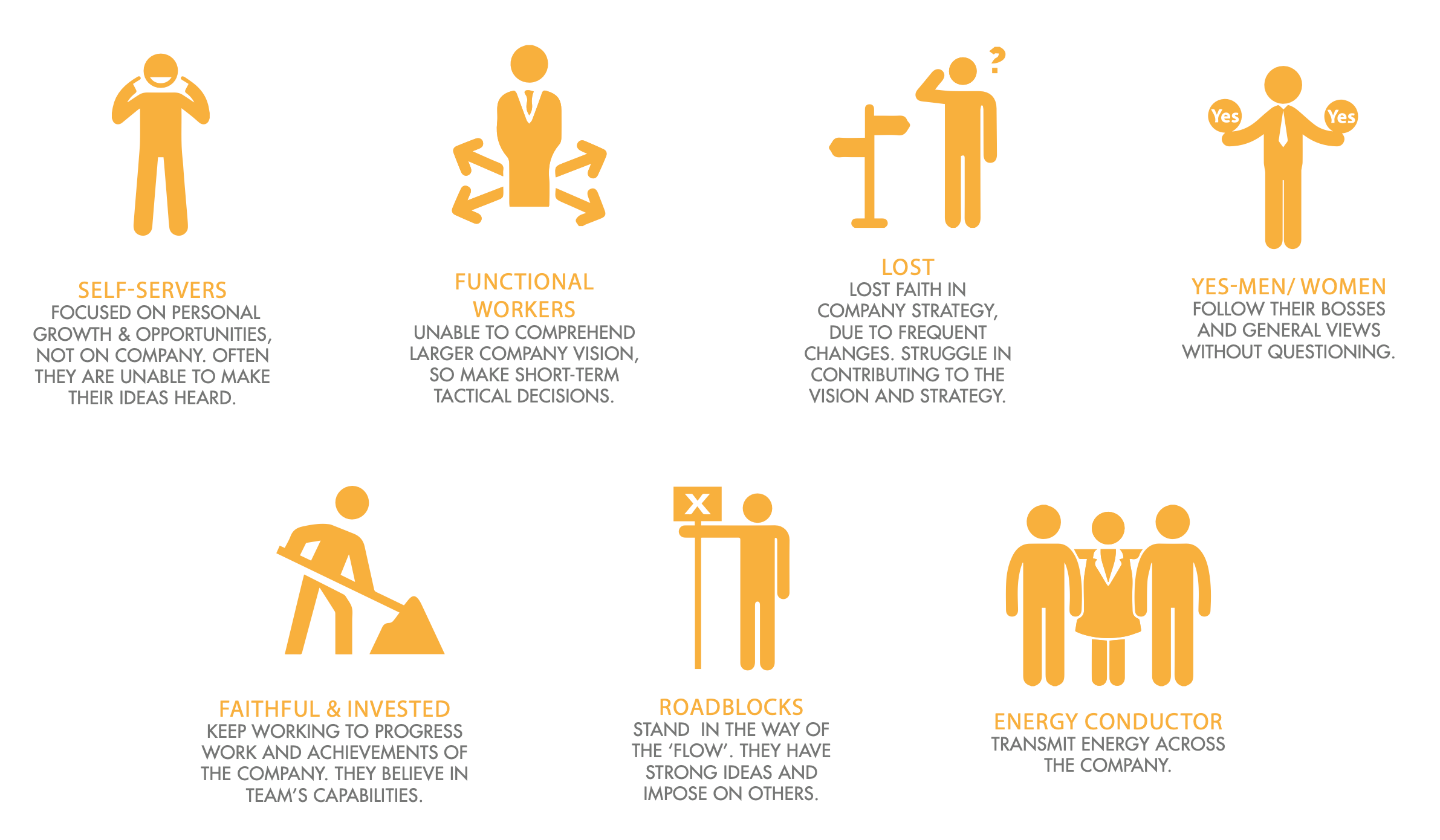
The archetypes in Figure 3 need some further explanation, and are thus described as:
Self-Servers: more focused on personal growth & opportunities;
‘Yes-Sayers’: working to please their managers, or to align with their views in a non-critical way;
Functional Workers: unable to comprehend or work towards the larger company vision and often push for short-term tactical decisions, potentially compromising long-term strategies;
The Lost: suffering a loss of faith in company strategy, due to frequent changes and their struggle in contributing to the vision & strategy, where they may not make their ideas heard;
The Faithful and Invested: continuously progressing the work and achievements of the company, believing in the team’s capabilities to tackle any situation they may face;
Road-blockers: standing in the way of the two-way ‘flow’ of ideas and opinions, especially by imposing their ideas on others while often being unreceptive to different opinions; and
The Energy Conductors: optimistic and positive transmitters of energy to others.
While the archetypes are situational and identify individual behavioural traits, a complementary approach can map out functional behavioural patterns at the organizational level. In the next section, this approach has been applied to the company’s internal dynamics through a metaphor-based narrative that identifies the functional and operational components needed to work effectively and collaboratively towards the company vision.
As a complex living system operating in a world of equivalent complexity, the company must set in place appropriate pathways to achieve company objectives, while also addressing needs and expectations of internal stakeholders (Capra 2002). To do this, an analysis of the organizational constituency and behaviour must be conducted and translated into meaningful strategic activities, for implementation within the company environment.
Finding a Narrative
Without a clear and shared strategy, executing a company’s long-term growth plan at an operational level is difficult, and can often end in failure to achieve desired goals. An insightful way to understand the company’s functioning and operation as a Living System can be sought through establishing a comparison between the organiational chart and the physiology of a cell (Figure 4). As a cell’s organelles execute its living and replication functions (cell metabolism), the company is composed by a range of multidisciplinary sub-groups. How they interact with each other informs performance, outcomes, and innovation capability.
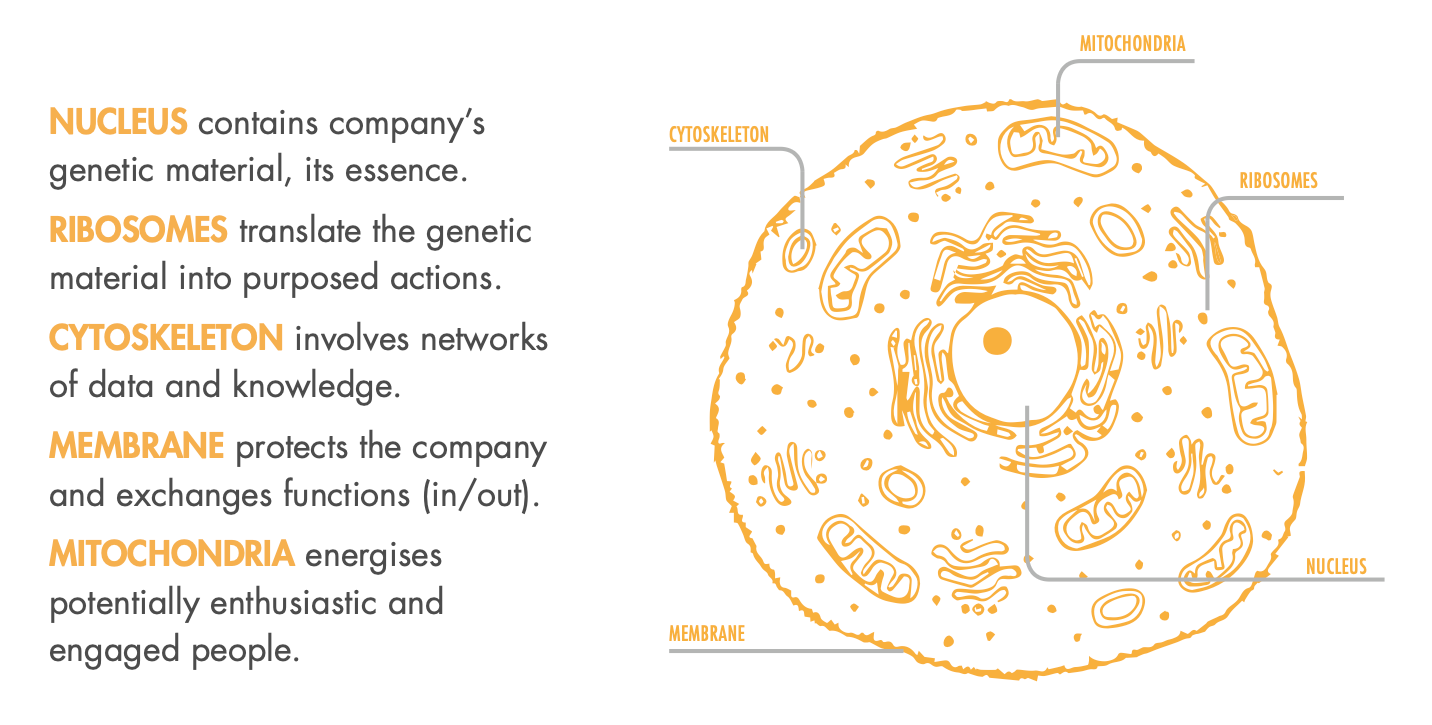
The narrative can be synthesised as follows.
Nucleus (Management board): the nucleus contains the company’s genetic material, its DNA and essence. Long term information is stored in its members’ innovativeness and foresight, coding company’s mission and vision, and transported into the whole cell by transcripts that regulate cell activities, constituting the company strategy. Currently, the company’s strategic plan is not aligned with long term vision: as a result, cell actions are not targeted, causing a discomfort which is compromising its functioning.
Ribosomes (Department leaders): ribosomes translate the genetic material and convert the transcripted information into synthesised proteins that will be then processed by the other cell organelles. The company’s strategy must be segmented and unpacked by company leaders into purposed and meaningful actions involving all the company processes. Currently, ribosomes are responsive to signals that have been incorrectly processed in the nucleus (lack of strategic planning) and are producing unforeseen actions for company functioning (non-linear decisional processes).
Cytoskeleton (IT Department/Operations): The cytoskeleton acts to organise and maintain cell shape, anchors organelles in place, helps during the uptake of external materials, and moves parts of the cell in processes of growth and mobility. There are a great number of proteins associated with it, and it’s essential to cell stability and life. The company’s cytoskeleton involves networks processing and transmission of data and knowledge and is currently being limited by the nature of the provided proteins (inputs) to build with.
Membrane (Business Development Department): The membrane is a semi-permeable wall acting with both the function of transporting the cell products outside of it ensuring they are needed and used by other entities, and to selectively accept external inputs useful for cell growth. Currently, company protective and exchange functions are hacked by the need for additional elements for the cell metabolism (company growth), and as a result company is inadequately protected from the external forces acting on the medical device ecosystem (healthcare policies, market, regulations, competitors).
Mitochondria (Staff): Mitochondria are self-replicating organelles that can be present in various numbers, shapes, and sizes. They are responsible for the respiration process, an energy generating mechanism using oxygen to release energy stored in cellular nutrients. Currently, the inadequacy of company’s metabolism is hindering the activity of a large group of potentially enthusiastic/engaged people that produce a limited amount of energy, barely necessary for its basic functions, making company’s respiration (operational tasks like customer service, design, production) extremely difficult.
In order to ensure company’s cell metabolism and growth are preserved and nurtured, it is essential to identify and activate both ribosomes (future leaders) and mitochondrias (energy conductors), which have to achieve the company’s mission and vision.
Design Response
The research and analysis showed that the lack of alignment and participation in the company’s mid- and long-term strategy is an internal weakness. As a result, (i) informal networks override the company’s formal structure and functioning and (ii) an emergent adaptive behavioural pattern has been observed.
In response, the Design Team proposes that the informal emergent behavioural pattern should be leveraged and aligned to a shared strategic plan, that is, to implement a reorganization of the company’s working teams based on the company’s informal structure.
Taking into consideration the staff capability, functional roles, visibility and knowledge, the formation of three teams have been suggested: the Future Team, the Energy Team and the Advisory Team (Figure 5).
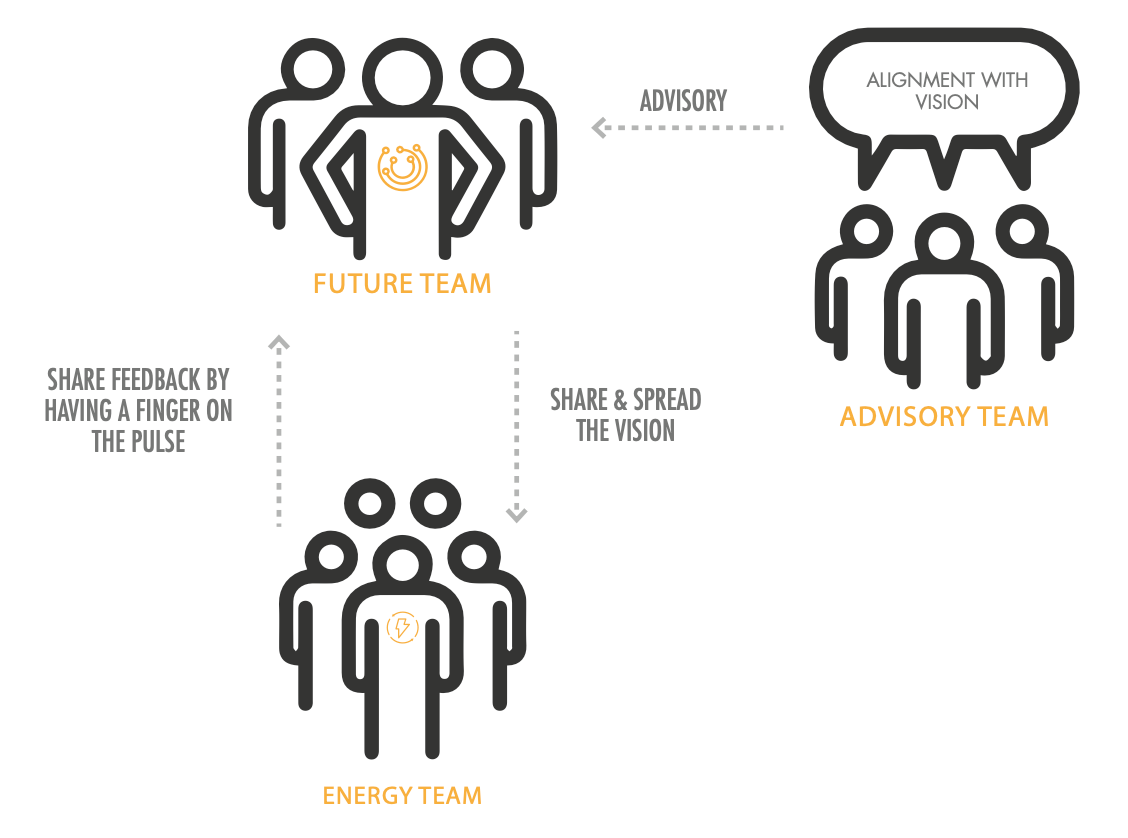
Inspired by informal networks, these formal teams will work cooperatively to develop semi-formal relationships around the organization to propose and implement strategic decisions and activities. They are explained as follows:
Future Team: They are crucial to translate the Advisory Team’s larger vision into feasible short- and mid-term goals, and enable the rest of the organization to take action.
Energy Team: They connect all areas of the organization to generate buy-in and enthusiasm around the common goals developed by the Future Team. The members of this team can perform their function interspersed between their daily work using informal channels.
Advisory Team: Being knowledge and corporate memory holders from different parts of the organization, they ensure that the Future Team’s map aligns with the long-term vision of the company.
According to the observations gathered throughout the project, it has been possible to identify potential members for the above-mentioned teams. The proposed system will operate with the specific objective of facilitating the decision-making process and engaging the entire organization towards a shared vision and the realization of the defined milestones.
By creating a discussion space around the company’s directions and vision, the Future Team will engage the vice presidents towards the co-creation of a designed strategy, while the Energy Team leverages the optimism and proactivity of the company. It will then be possible to execute an integrated innovative strategy at every level of the organization using the most appropriate people in each position.
Further research is needed to include the design of a strategic plan for the implementation of the proposed changes within the organization, including the application of foresighting techniques generating scenarios and narratives to foster increased participation and engagement within the company. This will ensure sustainability of the proposed practices, stimulate discussion and harness collaborative practices towards enhancing the engagement in future oriented behaviours (Candy & Dunagan 2016).
With this perspective, and with the role of strategy facilitator, the Future Team will be ideally positioned to test these techniques in a range of activities and workshops.
Conclusions and Recommendations
To survive in today’s volatile, unpredictable, complex and ambiguous world, companies must attempt to stay agile and innovative. In the process, it is apparent that these companies will eventually face organizational development problems. This project investigated the case of development of a small-scale company, applying a multi-layered approach centred in complexity-based strategic design practices.
When considering sustainability and long-term innovation, strong contextual and system analysis adds significant value by complementing traditional synthesis processes. This is especially true in understanding and managing complex living systems. Research tools and theoretical frameworks were used together in a complementary fashion to view the organization through a unique perspective and gather deep relevant insights accordingly.
Through the combined use of these methodologies, internal company dynamics were mapped and emergent behavioral patterns identified. This research addressed communication and strategic issues concerning the company’s internal functioning, aiming to promote activities that foster culture and resilience. By viewing the company’s internal ‘health’ through a focus on individual roles, interpersonal relationships and a shared common vision, it ties the company success to its people more tightly. The activities and collective reflection conducted within the organization opens lines of communication and further reflection. The support of open discussion and internal ownership aims to promote coherent growth and meaningful sustainable innovation.
This work contributes to the field of Design Management by promoting a complexity-oriented strategic design-based approach towards strategy-alignment and organizational development. It aims to significantly advance the management in small-scale companies through a sustainable innovation mindset, fostering the central role of design in the contemporary management of businesses and organizations. While this project supports future organizational development initiatives in small-scale companies, there is potential to scale the approach and find applications in medium and moderately-large sized companies.
References
Arnstein, S.R. (1969), A Ladder of Citizen Participation, Journal of the American Planning Association, 35(4), pp. 216-224.
AtKisson, A. (1991), The Innovation Diffusion Game, Context Institute, retrieved 10 November, 2017, <http://www.context.org/iclib/ic28/atkisson/>.
Buchanan, R. (1992), Wicked Problems in Design Thinking, Design Issues, 8 (2), p.5.
Brown, V., Harris, J. & Russell, J. (2010), Tackling wicked problems through the transdisciplinary imagination, Earthscan, London.
Candy, S. & Dunagan, J. (2016), The Experiential Turn, Journal of Future Studies, 1, pp. 26-29.
Capra, F. (2002), The Hidden Connections: A Science for Sustainable Living, Anchor books, New York.
Checkland, P. (2006). Systems Thinking, Systems Practice: includes a 30-year retrospective. Chichester: John Wiley and Sons
Cynefin Contextualisation: Four tables (2009), Cognitive Edge, pp. 1-7.
Gharajedaghi, J. (2011). Chapter two: Systems Principles. Systems thinking: managing chaos and complexity: a platform for designing business architecture. (3rd ed.). Burlington: Morgan Kaufmann.
Mair, C., Martincova, M. & Shepperd, M. (2009), A Literature Review of Expert Problem Solving using Analogy, retrieved 10 January, 2018, <https://ewic.bcs.org/content/ConMediaFile/10325>.
Nedopil, C., Steger, U., & Amann, W. (2011). Chapter 15 Innovation management. Managing complexity in organizations: text and cases. Basingstoke: Palgrave Macmillan.
Rogers, E. (1995), Diffusion of Innovations, 4th Edition. Free Press, New York.
Sanders, E. & Stappers, P. (2008), Co-creation and the new landscapes of design, CoDesign, 4, 1, pp. 5-18.
Snowden, D., & Boone, M. E. (2007). A leader’s framework for decision making. Harvard Business Review, November 2007, 68-76.
The Cynefin Framework, (2010), Cognitive Edge, 11 July, retrieved 26 October 2017, https://www.youtube.com/watch?v=N7oz366X0-8&t=52s
The Future, Backwards. (2009) Cognitive Edge, pp. 1-6.
Walloth, C. (2016), Emergent Systems: Nested, Fast, and Slow, Understanding Complex Systems, pp. 13-27.
Wujec, T. (2015), Marshmallow Challenge, retrieved 10 November, 2017, <https://www.tomwujec.com/design-projects/marshmallow-challenge/>.